RAM is one of the most misunderstood PC components. Many people assume faster RAM always means better performance. As a hardware tester who has tested the same systems with DDR4 and DDR5 side by side, I can tell you this: the difference is real, but it’s not always meaningful.
In 2025, both DDR4 and DDR5 are widely used. The real question is not which one is newer, but whether upgrading actually improves what you do every day.
What Changed from DDR4 to DDR5
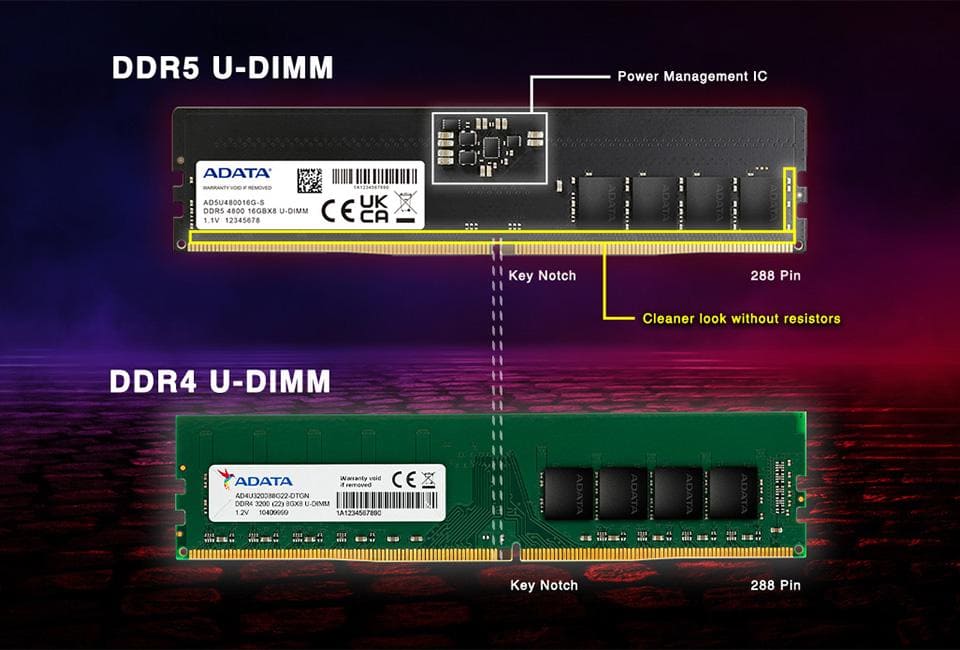
On paper, DDR5 looks like a big jump. Higher speeds, better power management, and more bandwidth.
In real-world testing, however, performance depends heavily on how the system uses memory. Some workloads benefit clearly. Others barely notice the change.
DDR5 is designed for modern CPUs that handle large amounts of data at once. DDR4 is a mature, stable platform that still performs very well.
Gaming Performance: What We See in Testing
For gaming, RAM speed matters less than most people think. The GPU does most of the work, and the CPU handles game logic.
In our tests, moving from good DDR4 to entry-level DDR5 usually shows small gains. In some games, the difference is barely visible. In others, faster DDR5 helps slightly with minimum frame rates.
High-end DDR5 can perform better, but the price jump often does not match the performance gain for gaming alone.
Creator Workloads: Where DDR5 Makes More Sense
Content creation tells a different story. Video editing, 3D rendering, and heavy multitasking benefit more from memory bandwidth.
In testing:
- Large video timelines load faster
- Background tasks run more smoothly
- Heavy exports feel more consistent
DDR5 shines when the workload constantly moves large chunks of data. For creators working with high-resolution media or complex projects, DDR5 starts to make sense.
Stability and Maturity: A Tester’s View
DDR4 is extremely mature. It is easy to configure, widely supported, and very stable across platforms.
DDR5 has improved a lot since launch, but it still depends more on motherboard quality and BIOS support. In testing, cheaper boards sometimes struggle with high DDR5 speeds.
This does not mean DDR5 is bad. It just means platform quality matters more.
Power Efficiency and Heat
DDR5 is more power-efficient by design, and it manages voltage differently. In long testing sessions, DDR5 systems often show slightly better thermal behavior.
For desktops, this difference is small. For laptops and compact systems, it can matter more.
Simple Comparison Table: DDR4 vs DDR5 (2025)
| Feature | DDR4 | DDR5 |
|---|---|---|
| Typical Speed | Lower | Higher |
| Gaming Performance | Very good | Slightly better |
| Creator Workloads | Good | Better |
| Stability | Excellent | Very good |
| Platform Cost | Lower | Higher |
| Power Efficiency | Good | Better |
| Upgrade Value | Limited future | More future-ready |
Should Gamers Upgrade?
From a tester’s point of view, most gamers do not need to rush to DDR5. A good DDR4 setup paired with a strong GPU still delivers excellent gaming performance.
DDR5 makes more sense if:
- You are building a new system
- You already need a new motherboard
- You play CPU-heavy games
Upgrading RAM alone rarely brings dramatic gaming gains.
Should Creators Upgrade?
For creators, DDR5 is easier to recommend. If your work involves heavy files, long timelines, or multiple apps at once, DDR5 provides smoother performance.
The upgrade feels more noticeable in daily work, not just benchmarks.
In Conclusion
DDR5 is not a magic upgrade. It is a gradual improvement, not a revolution. In 2025, DDR4 is still a solid choice, especially for gamers on a budget.
DDR5 is about preparing for the future and supporting heavier workloads. If your system needs it, you will feel the difference. If it doesn’t, your money may be better spent elsewhere.
The best upgrade is always the one that matches how you use your PC.